
Climate Apocalypse, Atom Bomb and Simulation
- Maria Kaminska

- Jun 4, 2021
- 2 min read
My recent work is increasingly more focused on the feeling of impending disaster which stretches into infinity, the feeling of anticipation of the apocalypse that never really arrives.
The film piece ‘NO EXIT’ explores this eschatological conundrum as a political and historical one, reliving moments from the past when the world was about to end (like the threats of nuclear attacks) and melting them into one narration with the current climate crisis. The film explores the capitalist realist condition of being stuck in time, or stuck in history through themes like simulation and repeatability. This exploration is strongly underlined by the work of Mark Fisher who in a lot of his writing provides a thorough analysis of Bifo Berardi’s concept of the slow cancellation of the future. In a world whose future was cancelled it is essentially impossible to come up with anything new, all that remains is a repetition and reorganization of the past. This also has a political dimension in the concept of capitalist realism – as the great revolution of socialism that guided modern society is becoming impossible, it is increasingly impossible to even come up with an alternative to the capitalist system, it is impossible to come up with something new – even politics are laced with nostalgia for things like welfare stateism of the 1970s. All of this creates a claustrophobic landscape of no exit and no possibility of change, that I try to navigate in an emotional and aesthetic way.
Another important concept that guides this piece is the idea of simulation, of a Baudrillardian presupposition that the spectacle of tragedy we are living through is, to an extent, a fabricated simulacrum. Of course this is not to say that the climate crisis is a hoax, but rather that the way that we engage with it is through images, representations, media reports, narrations of activist reports and imagined consequences (which are strongly based on the past imaginations of ‘catastrophes’), which melt into a simulated end – that one, which should have arrived long ago.
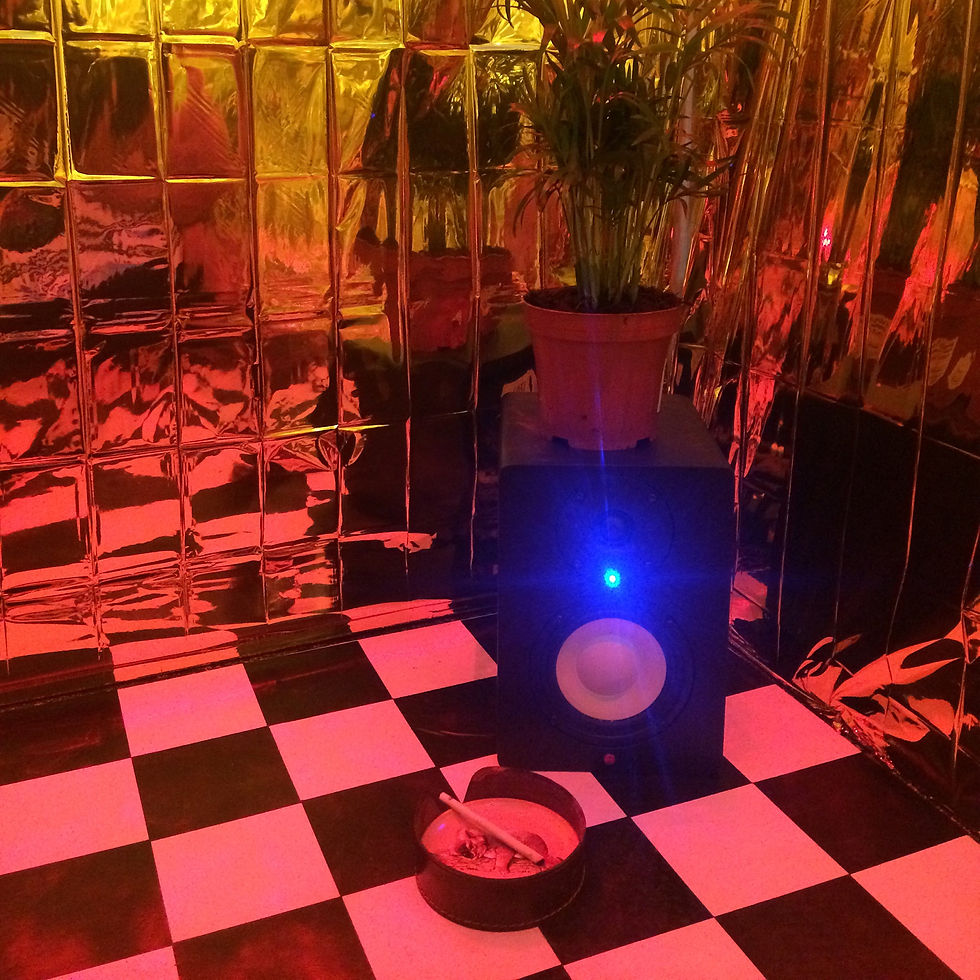
My work explores these concepts by creating an immersive space, a kind of trap that implies a resolution but never provides it, instead enveloping the viewer in a series of repetitions and simulations, playing on the border between the real and not real, the everyday and the extraordinary, the familiar and the unsettling, and sometimes questioning the reality that they are transported into.


Comments